
What to Do with All Those Jeans in Your Closet?
The Environmental Protection Agency estimated that in 2018, the generation of textiles in the United States reached 17 million tons. That number represented 5.8 percent of total municipal solid waste for that year.
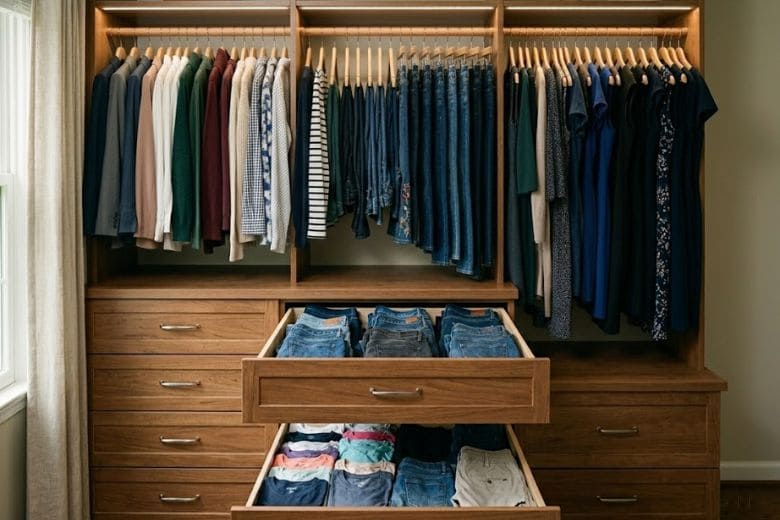
I cannot count how many times I have stood in front of my closet and said, “I have nothing to wear.”
And then laughed, because the truth is almost embarrassing. The closet is packed, and the shelves are full, especially jeans.
If I am being completely honest, jeans are my weakness. They are safe, practical, and timeless.
As a mom of three who runs a household and writes from home, I reach for denim more than anything else, because it works for school pick-up, grocery runs, quick meetings, and even casual dinners.
Yet somehow, even with too many pairs, I have still felt the urge to buy another one.
How Jeans Trends In Over the Years
Around 2012 and 2013, skinny jeans were everywhere. I owned them in dark wash, light wash, distressed, and black.
I paired them with long sweaters and ankle boots when my kids were younger and I needed something flexible but flattering.
By 2016 and 2017, high-rise jeans became popular. After three pregnancies, I welcomed that trend with open arms. I convinced myself this new cut was completely different and therefore necessary.
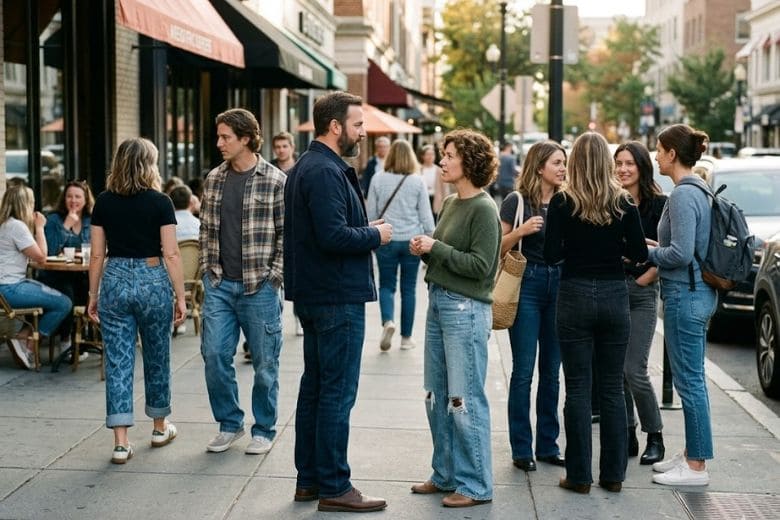
Then in 2019 and 2020, straight-leg and mom jeans made a comeback. Relaxed fits became stylish again.
Social media was full of effortless outfits styled around vintage-inspired denim. Once again, I told myself this shape filled a gap in my wardrobe.
Each shift felt subtle. But then, those subtle shifts turned into over 50 pairs of jeans hanging in my closet.
Why We Keep Buying Even When We Do Not Need More
For me, the buying was convenience. A sale notification made it feel smart to purchase.
Sometimes it was stress. After a long week, clicking “add to cart” felt like a small reward. And sometimes it was insecurity. If a trend changed, I wondered if my older pairs suddenly looked outdated.
The reality is that the fashion industry thrives on encouraging small, repeated upgrades.
And when you are busy raising children, managing a home, and navigating life’s challenges, it can be easier to buy than to pause and reflect.
After surviving thyroid cancer two years ago, I promised myself I would live more intentionally. Yet last Saturday afternoon, while reorganizing my closet, I had to admit too many pairs of jeans.
Some are nearly identical, and some still with the tag attached. I had to rethink my consumption seriously.
My Three-Pile System: Keep, Upcycle, Recycle
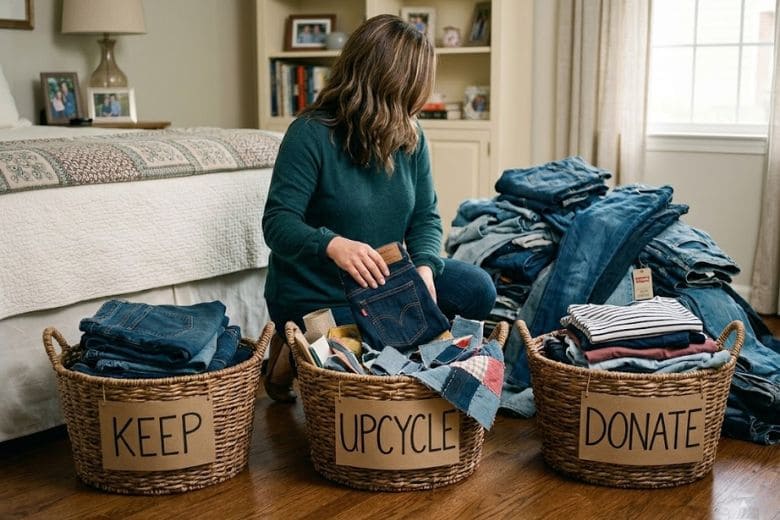
I pulled every pair of jeans out and tried them on one by one.
Then I asked myself: does this fit me right now; Do I feel comfortable sitting and moving in it; Does this reflect who I am today, not who I was five years ago.
Then I sorted them into three categories:
- Keep
- Upcycle
- Donate
And surprisingly, the keep pile became smaller than I expected.
For sentimental or slightly worn pieces, I explored upcycling. Denim can become tote bags, gardening aprons, storage bins, or patchwork quilts. Its durability makes it ideal for creative reuse.
For the remaining pairs, I researched responsible recycling programs.
I Learned About the MUJI Denim Recycling Program
While surfing the Internet, I came across MUJI’s denim recycling initiative, and I was genuinely impressed by how practical and accessible it is.
Their message is simple and direct:
“Have denim you no longer wear or use? Drop it off at any MUJI location and we’ll work with our friends at the Blue Jeans Go Green™ program to recycle your denim into housing insulation for those in need. We’ll take any denim with 90% cotton or more, regardless of brand, size, or color and you’ll get $10 OFF a brand new pair at MUJI.”
They accept denim from any brand, it does not have to be purchased from MUJI.
The key requirement is that the fabric contains at least 90 percent cotton, and the items should be clean and dry before drop-off.
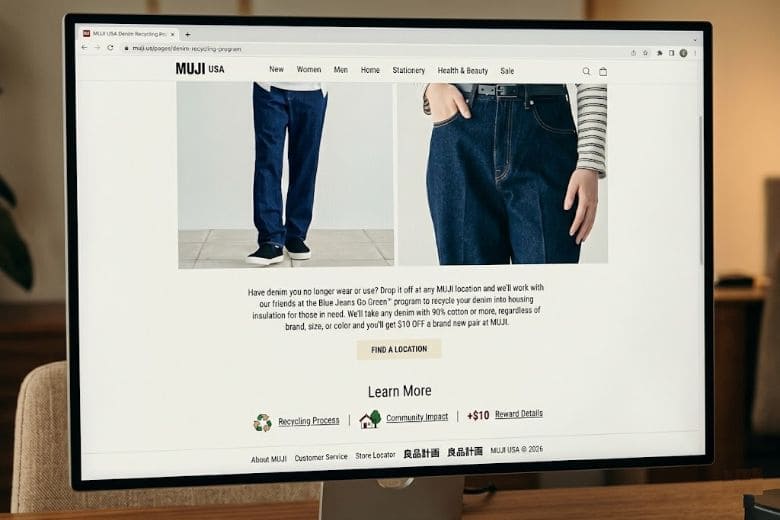
What truly stood out to me was the partnership with the Blue Jeans Go Green™ program.
Instead of sending old denim to landfills, the material is transformed into insulation used in housing projects for people in need. Your unwanted jeans can literally help warm someone’s home.
And as an added incentive, you receive a $10 discount toward a new pair at MUJI when you participate.
I appreciate that the program combines environmental responsibility with consumer encouragement.
While I am now more mindful about buying less, I understand that many people will eventually purchase new clothing. If that purchase is paired with responsible recycling, it is a more balanced system.
Blue Jeans Go Green™ Program Details
The Blue Jeans Go Green™ program itself accepts denim of any brand and color. Items must be clean and dry. They do not require perfect condition because the fabric is broken down and repurposed.
The denim is converted into UltraTouch™ insulation, which is used in building projects, including community housing initiatives.
Knowing that something sitting unused in my closet could become part of a real home for someone else changed my perspective entirely.
Before participating, it is important to:
- Confirm current drop-off or mailing instructions
- Ensure denim contains sufficient cotton content if required
- Wash and fully dry all items
- Remove non-denim attachments if necessary
Donation Is Still a Beautiful Option
For jeans that are still in good, wearable condition, donating locally is often the most direct and impactful choice.
In my area, I called a local women’s shelter to ask what they actually needed. I was surprised by how specific their requests were.
They told me that well-fitting jeans in standard sizes, especially darker washes without heavy distressing, were the most practical because many women need something appropriate for job interviews, work shifts, or everyday errands.
They also mentioned that items should be freshly washed, folded neatly, and free from strong fragrances, since some residents are sensitive to scents.
In addition, I found trusted organizations. Large national charities such as Goodwill Industries and The Salvation Army accept gently used clothing and often provide detailed donation guidelines on their websites.
They include what condition items should be in and how proceeds support job training, housing assistance, and rehabilitation programs.
If you are looking for something more focused on women and families, Dress for Success is a wonderful organization that supports women entering or re-entering the workforce.
Although they are known for business attire, some locations accept clean, polished denim appropriate for modern workplaces.
If You Want to Start Today
Here is a simple action plan:
- Remove all denim from your closet.
- Try on each pair honestly.
- Keep only what fits and serves your lifestyle now.
- Upcycle sentimental or lightly damaged items.
- Donate gently worn jeans locally.
- Recycle cotton-rich denim through programs like MUJI or Blue Jeans Go Green™.
Before sending to an organizer, remember:
- Wash and dry everything thoroughly.
- Check cotton content, especially for MUJI’s 90 percent requirement.
- Review current program details online.
- Confirm participating store locations.